We Spent 30 Hours a Year Scooping Cat Poop.
Then We Looked Under a Microscope.
The untold biological reality of volatile ammonia and Toxoplasma in small apartments, why daily floor bending is destroying senior cat parents' backs, and the 5 crucial specs that stop cats from rejecting automatic boxes.
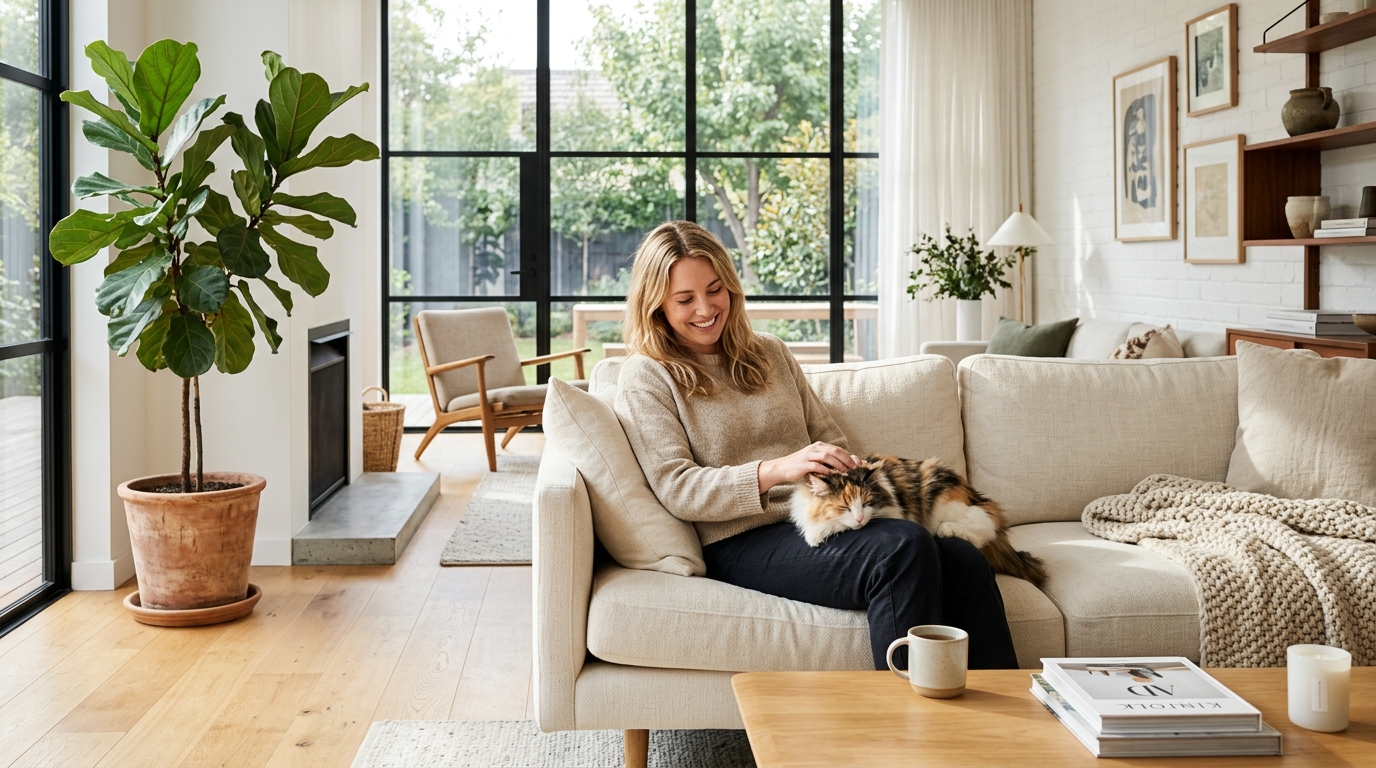
A serene, odor-free sanctuary where you never touch soiled clay again and your cat breathes clean air 24/7.
Spent crouching on tiled floors inhaling clay dust and aerosolized waste.
Before Toxoplasma oocysts sporulate and become infective in home air.
The maximum entry height for arthritic senior cats to avoid spinal compression.
Why Does Manual Scooping Feel Like Such an Uphill Battle?
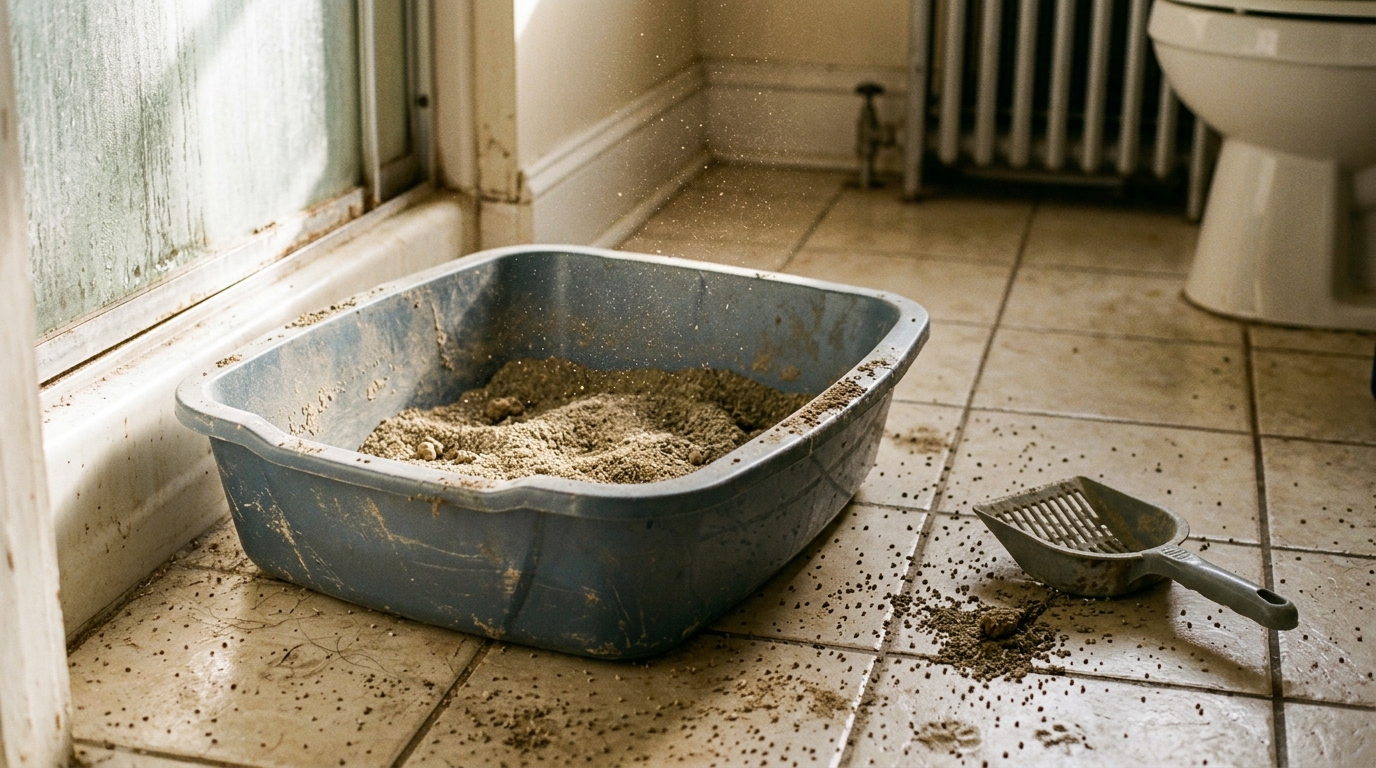
Traditional plastic boxes trap moisture, spread fine silica dust, and emit continuous ammonia between daily scoops.
Every cat parent knows that sinking feeling: you come home after a grueling 10-hour day, open the front door hoping to relax, and the first thing that hits you is that unmistakable, sharp tang of ammonia lingering in the hallway.
You grab the plastic scooper. You bend your lower back at an awkward 45-degree angle. You scrape dried clumps cemented to the plastic floor, while a cloud of fine gray silica dust rises directly into your face.
You tell yourself, "It’s just 5 minutes." But multiplying 5 minutes by 365 days equals over 30 full waking hours every year—spent literally sifting through urine and feces.
The Hidden Health Risks: What You’re Actually Breathing In
Cat waste is not merely an aesthetic nuisance—it is an active biohazard containing zoonotic parasites and corrosive gas.
Toxoplasma Oocysts: The Invisible Threat
Toxoplasma gondii sheds in feline feces and becomes infectious within 24–48 hours of air exposure. Maternal infection during pregnancy can cause severe neurological damage or blindness to a developing fetus.
Continuous Ammonia: $NH_3$ Gas
Bacterial urease converts urea into volatile ammonia within hours. Even if scooped once daily, a standard tray continuously emits caustic vapor for up to 23 hours, triggering morning headaches, burning eyes, and feline asthma.
Feline FLUTD: The $3,000 Vet Bill
Cats have 200 million scent receptors. When faced with an unclean tray, they stubbornly hold urine for 12–24 hours, directly triggering life-threatening urethral blockages and agonizing urinary tract disease.
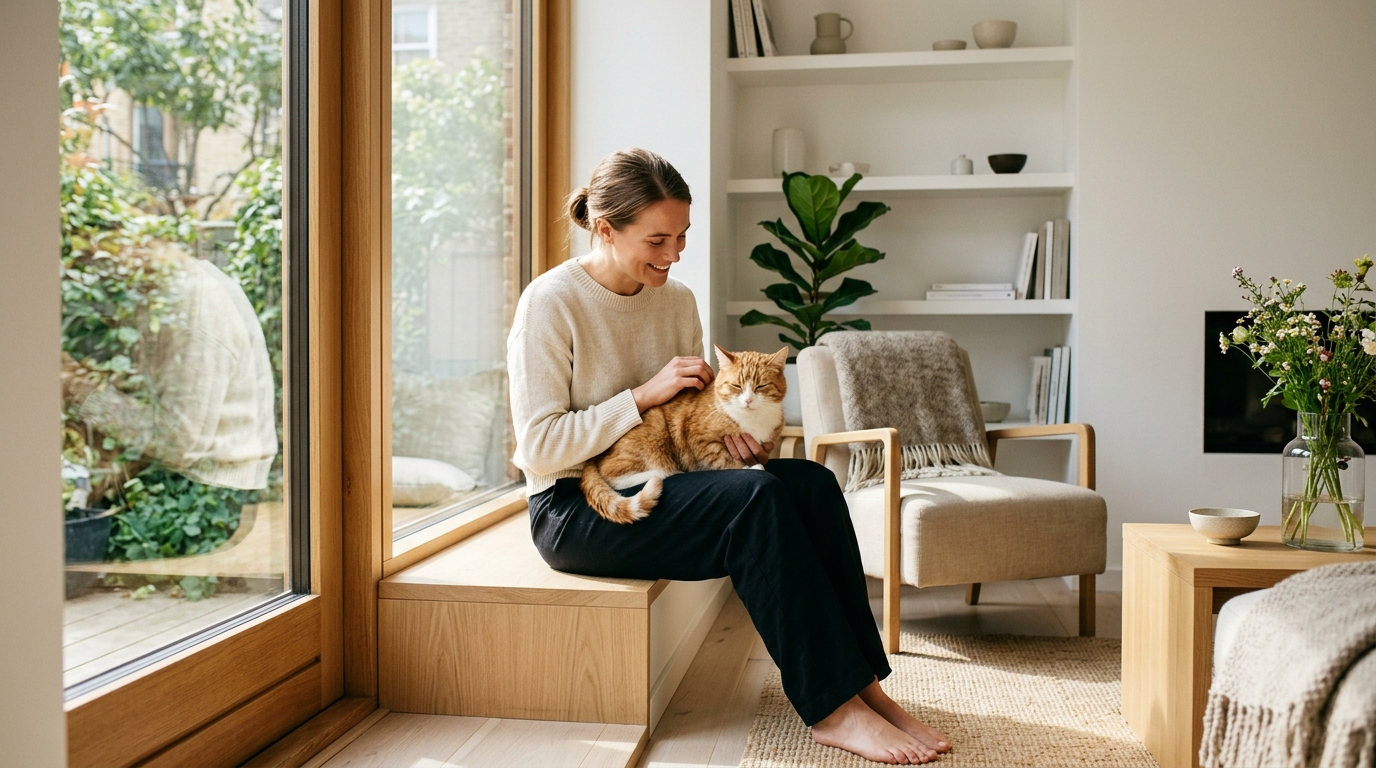
Why Step Height Matters: The 8-Inch Orthopedic Ceiling
Over 90% of cats over 10 years old suffer from degenerative arthritis. High vaulting entries cause micro-trauma and inappropriate bathroom accidents on your rugs.
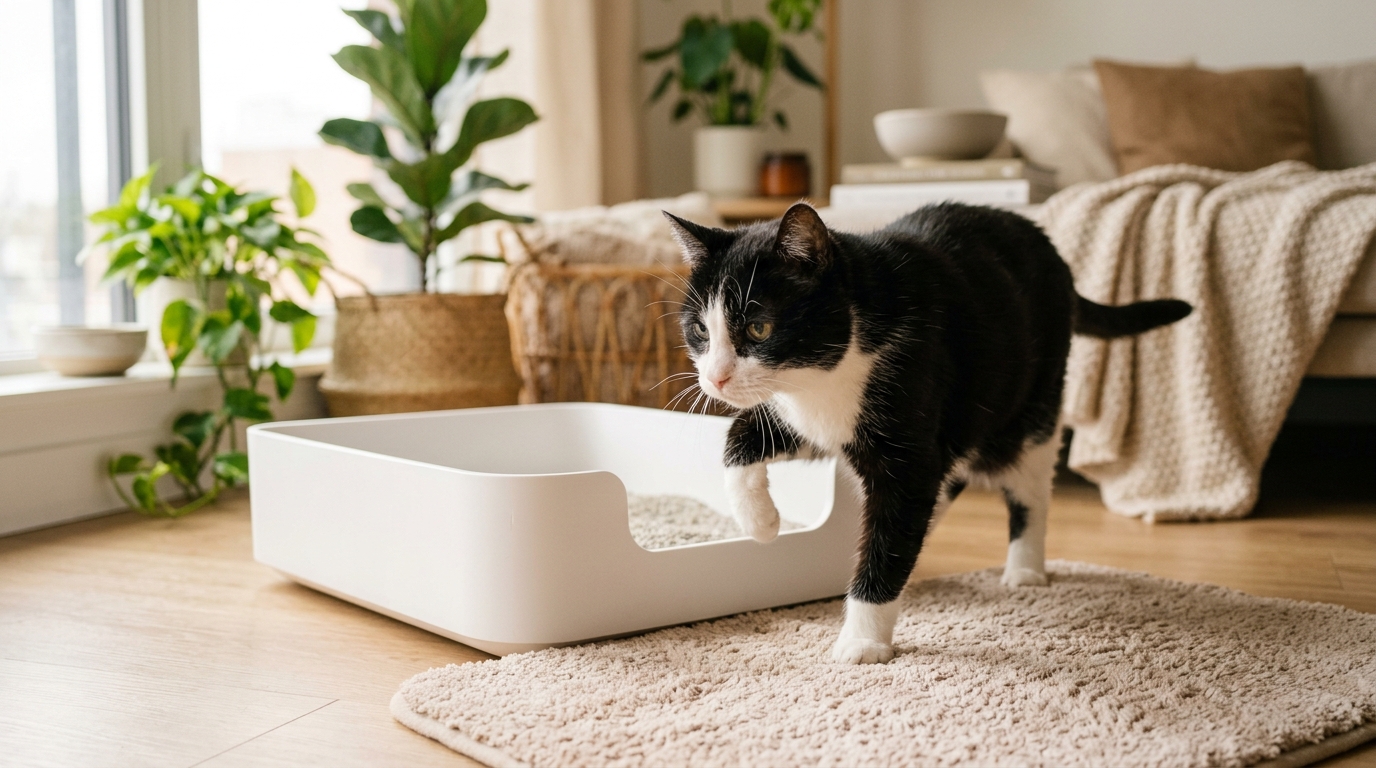
A low step threshold (<10") allows arthritic senior felines to step in without lumbar spine shock.
The Biomechanical Contrast
Forces cats to vault over a high lip, causing acute spinal flexion upon landing. Senior cats associate this landing shock with pain and reject the box.
Allows gentle walk-in access with flat entry floors. Arthritic senior cats and massive 20+ lb cats enter with zero hesitation.
If your cat stops using their litter box, they are almost never "acting out." They are experiencing joint pain or fear. Solving entrance ergonomics solves over 85% of refusal cases.
The 5-Step Checklist: How to Avoid a $600 Dust Collector
Before spending hundreds on any smart pet appliance, verify these 5 engineering checkpoints:
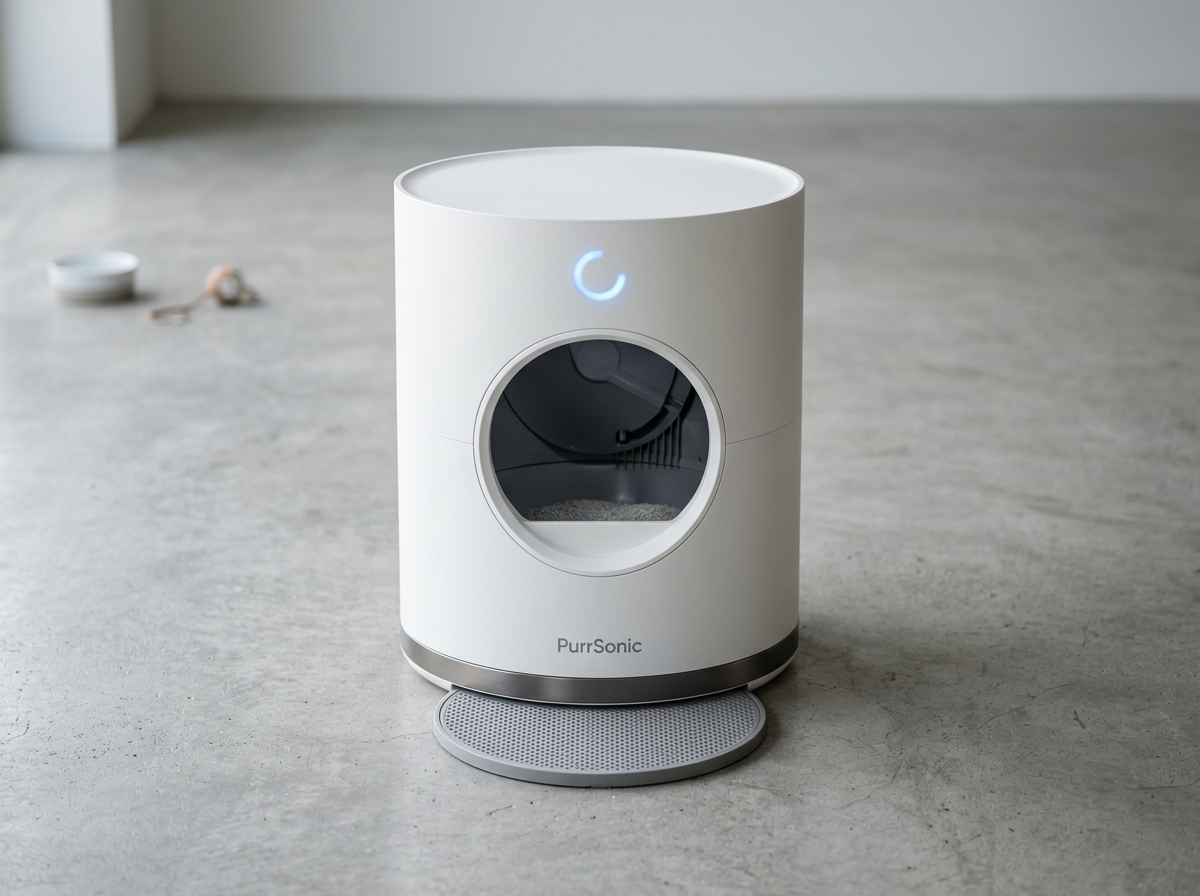
Step-In Height Under 10 Inches
Examine the actual sill elevation from the floor. Models like the PETKIT Purobot Max 3 feature a wide 10.5" rectangular walk-in aperture and a low 7.8"~9.8" entry threshold, allowing senior and stiff-jointed cats to step in naturally.
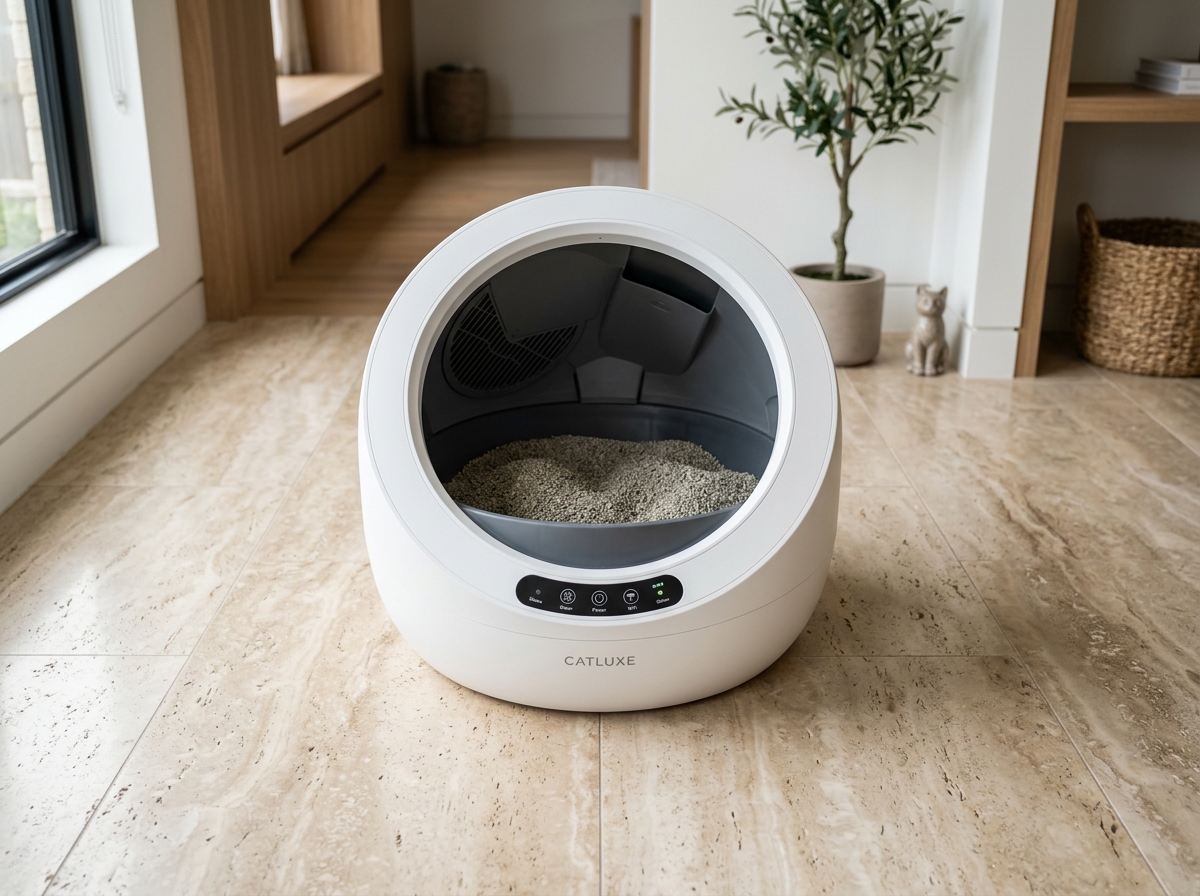
Open-Top vs. Enclosed Tunnel Claustrophobia
In nature, cats demand 360-degree vision while eliminating. For timid cats, Maine Coons, or cats over 15 lbs, the Neakasa M1 Plus 100% open-air basin eliminates all enclosed tunnel anxiety and accommodates large felines up to 33 lbs.
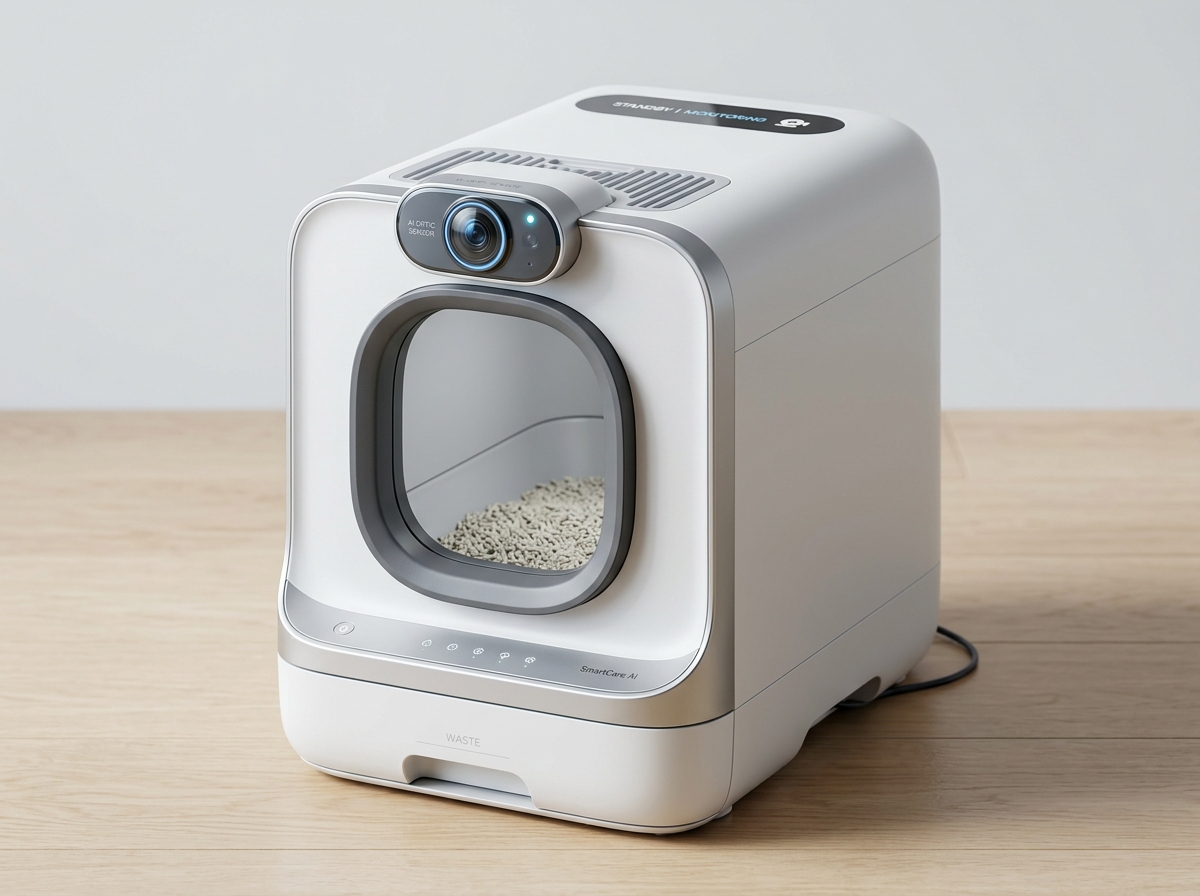
Safety Sensor Redundancy: Count, Don't Assume
Never buy a unit relying on a single weight sensor. Look for triple-layer protection: high-sensitivity weight pads + infrared doorway beam curtains + mechanical anti-pinch motor stall detection.
Sub-37 dBA Whisper Motors
Motors operating above 45 dBA produce high-frequency coil whine that terrifies cats at 2 AM. Top modern planetary gearboxes run under 35–37 dBA.
Standard Bag Compatibility
Beware of proprietary $30/month refill cartridges. Choose units compatible with universal 4–8 gallon small trash bags and backed by official 2-year warranties.
Which Solution Fits Your Household?
Click your biggest priority below to reveal the objective recommendation:
Ready to Compare the Actual Hardware?
See the full 4-way laboratory benchmark comparing the Litter-Robot 4 ($699) against the PETKIT Purobot Max 3 ($369.99) and Neakasa M1 Plus ($379.98). Unrestricted noise decibel charts, doorway dimensions, and direct Amazon Prime verified pricing.
100% Unsponsored Retail Benchmark · 30-Day Hassle-Free Amazon Returns
Frequently Asked Questions
Q: How quickly do Toxoplasma oocysts become infectious?
Toxoplasma gondii oocysts require 24 to 48 hours of exposure to ambient air and oxygen to sporulate and become biologically infective. An automated box that seals deposits into an airtight drawer within minutes stops sporulation in its tracks.
Q: Will an automatic litter box scare my cat?
Not if you follow the 4-day unpowered introduction protocol. Place the new unit unplugged next to the old box with a scoop of their familiar litter. Modern units run under 37 dBA and cycle only 5–15 minutes after the cat has walked away.
Q: What if my cat still refuses to use it?
Purchasing through Amazon provides a standard 30-day hassle-free return window. If you keep the original shipping carton and inner packing materials intact, you are protected by a full money-back guarantee.