How Many Watt-Hours Do You Actually Need to Survive a 3-Day Winter Grid Outage?
It is 2 a.m. A winter storm has just taken down the grid. Your refrigerator is holding a week of groceries, a family member depends on a CPAP machine, and the furnace fan is the only thing keeping the house above freezing. The brochure on that power station says 2,048Wh — but physics says you will actually get closer to 1,700. This is the honest math of surviving 72 winter hours, and the configuration that actually makes it.

The 72-Hour Watt-Hour Ledger
Every appliance draws power differently. Compressors pulse, furnaces cycle, and medical devices run on a strict schedule. The table below is a realistic daily ledger — not peak ratings, but what you will actually burn across three continuous winter days.
| Critical Load | 72-Hr Total |
|---|---|
| Full-Sized Refrigerator ~1,200–1,500 Wh/day | 3,600 – 4,500 Wh |
| Medical CPAP (humidifier off) | 600 – 750 Wh |
| Pellet Stove / Gas Furnace Fan | 2,700 – 3,600 Wh |
| LED Lighting + WiFi Router | 360 – 540 Wh |
| Full-Household Total | 7,300 – 9,300 Wh |
| Priority-Only Total (fridge + CPAP) | 4,200 – 5,250 Wh |
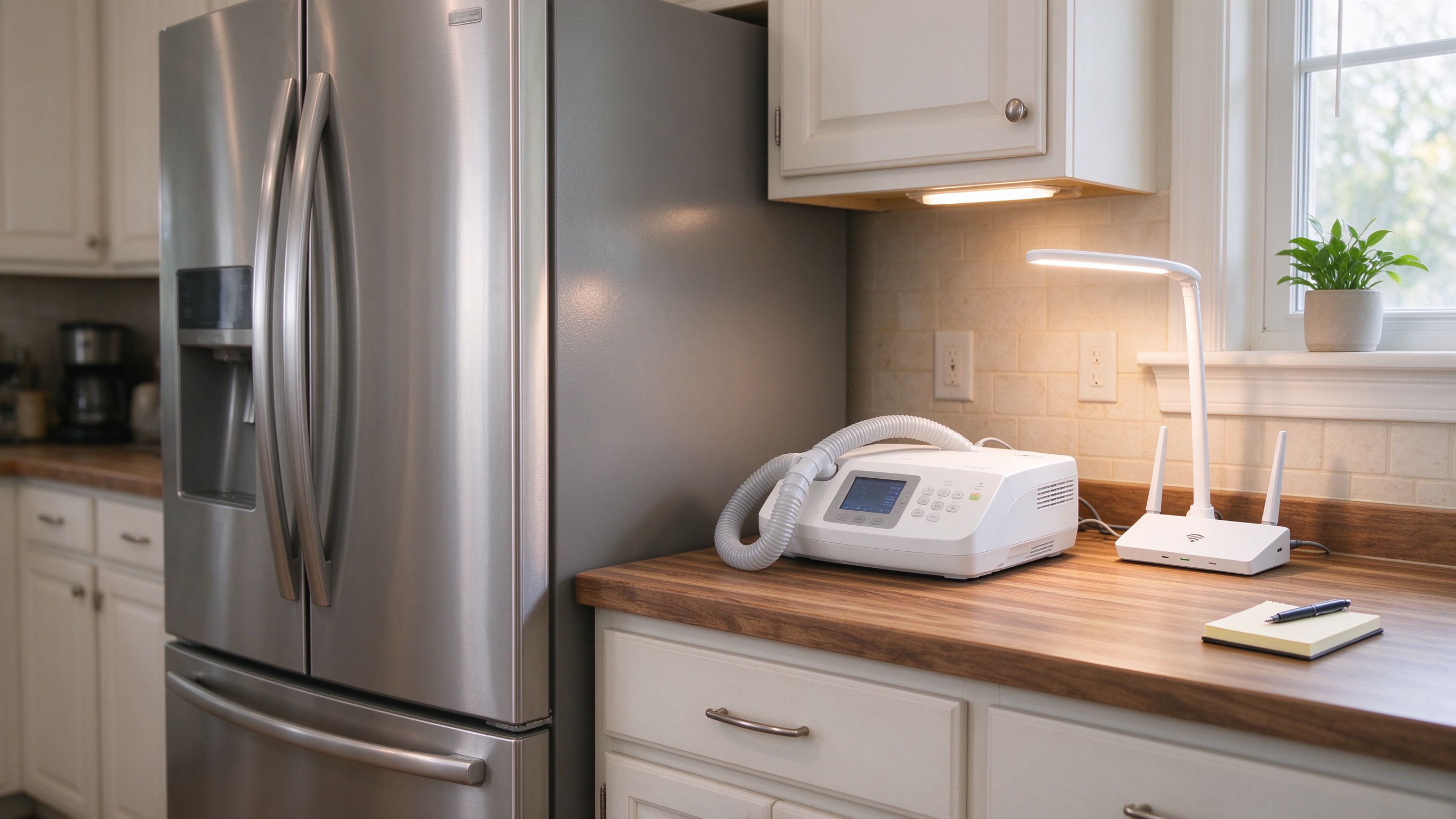
Multiply every number above by 1.25. A 2,048Wh station does not deliver 2,048Wh — inverter standby draw, cold-weather cell derating, and compressor inrush spikes consume roughly a quarter of rated capacity before your first appliance turns on. This buffer is not optional in winter; it is the difference between a 2-day station and a 4-day one.
Why the Brochure Number Never Matches Reality
Three physical effects silently drain the capacity the spec sheet promises. Understanding them is what separates a station that works from a station that fails at hour 14.
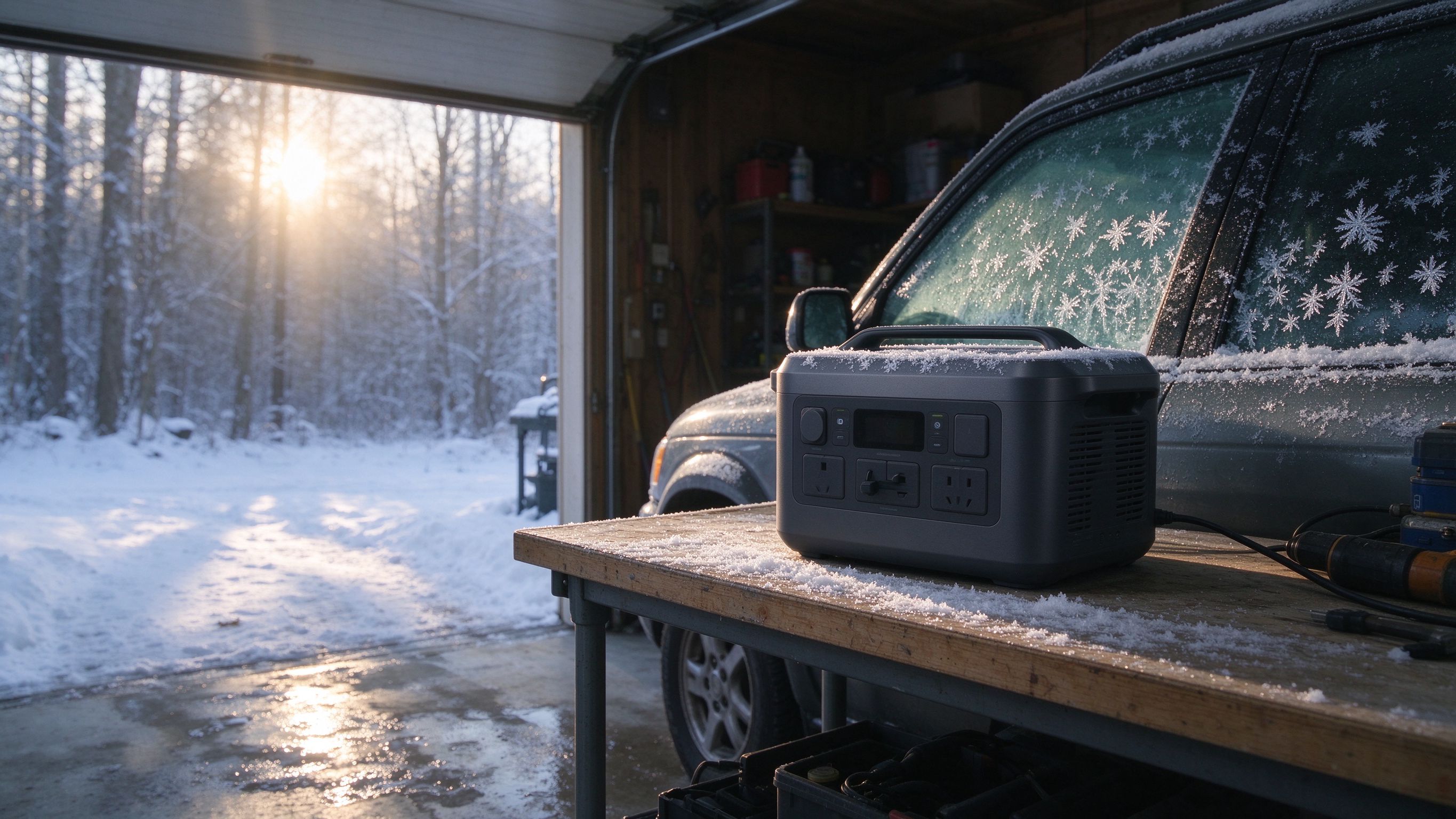
1 · Inverter Self-Consumption
Every station burns 15–35W just keeping the inverter alive. Over 72 hours that is 1,000–2,500Wh vanished before a single appliance runs — the hidden tax on "standby-ready" marketing.
2 · Cold-Weather Derating
Below 0°C, LiFePO4 chemistry delivers roughly 80–90% of rated capacity. A station that holds 2,048Wh in July may realistically hold closer to 1,800Wh in a January garage.
3 · Compressor Inrush Surges
Refrigerators draw 3–5× their running wattage for the first 100 milliseconds. Without inrush headroom, safety relays trip and your food — not the station — pays the price.
How to Size Your Own Station in 4 Steps
Ten minutes with a pen. No engineering degree required — just honesty about what you will actually run.
-
1
List critical loads, not convenient ones
Fridge and medical devices first. Heating fans, sump pumps, and induction cooktops only if they fit the math. Write each appliance's running watts, not its startup peak.
-
2
Multiply by hours, then add 25%
Watts × hours = Wh per day. Triple it for 72 hours. Then multiply the total by 1.25 for the efficiency tax — this is your true usable-capacity target.
-
3
Decide whether the sun participates
A 400W portable panel restores 1,000–1,600Wh on a clear winter day. With solar in the loop, a 2,048Wh station becomes a 3–5 day system; without it, the same station is a 1–2 day insurance policy.
-
4
Buy the chemistry, not the wattage
LiFePO4 with 3,000–4,000 cycle life beats older NCM chemistry at any capacity. Pure sine wave output and <10ms UPS transfer are non-negotiable for compressors and CPAPs.
The Solar Loop: How 2,048Wh Becomes a 3–5 Day System
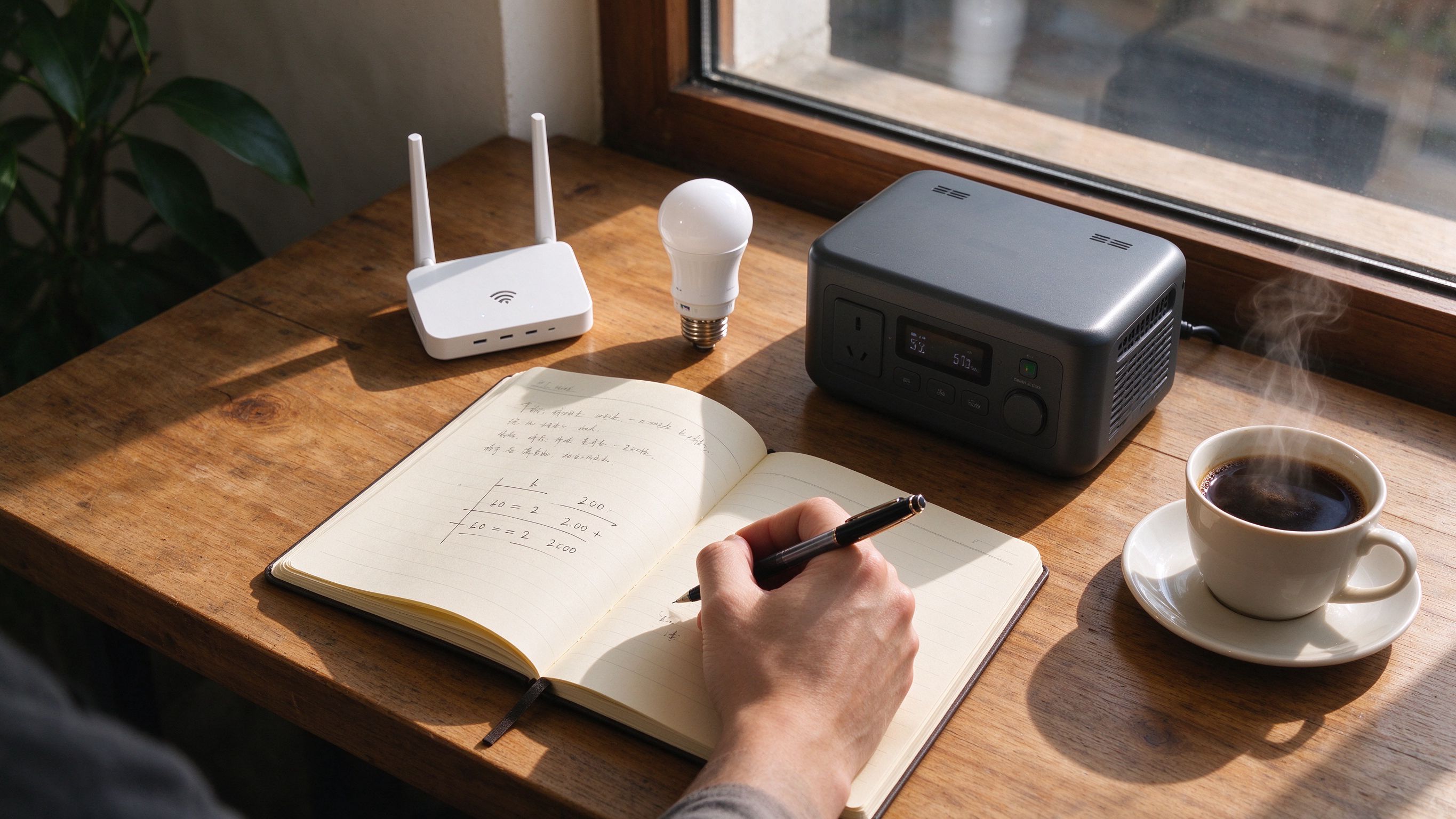
Here is the configuration that survives a full winter outage — not by storing three days of energy, but by earning it back every sunny afternoon. A 2,048Wh LiFePO4 station (roughly 1,740Wh usable) covers priority loads for about one day on its own. Add a 400W bifacial panel that restores 1,000–1,600Wh on a clear winter day, and the daily deficit shrinks to almost nothing — the station becomes a renewable loop instead of a finite battery.
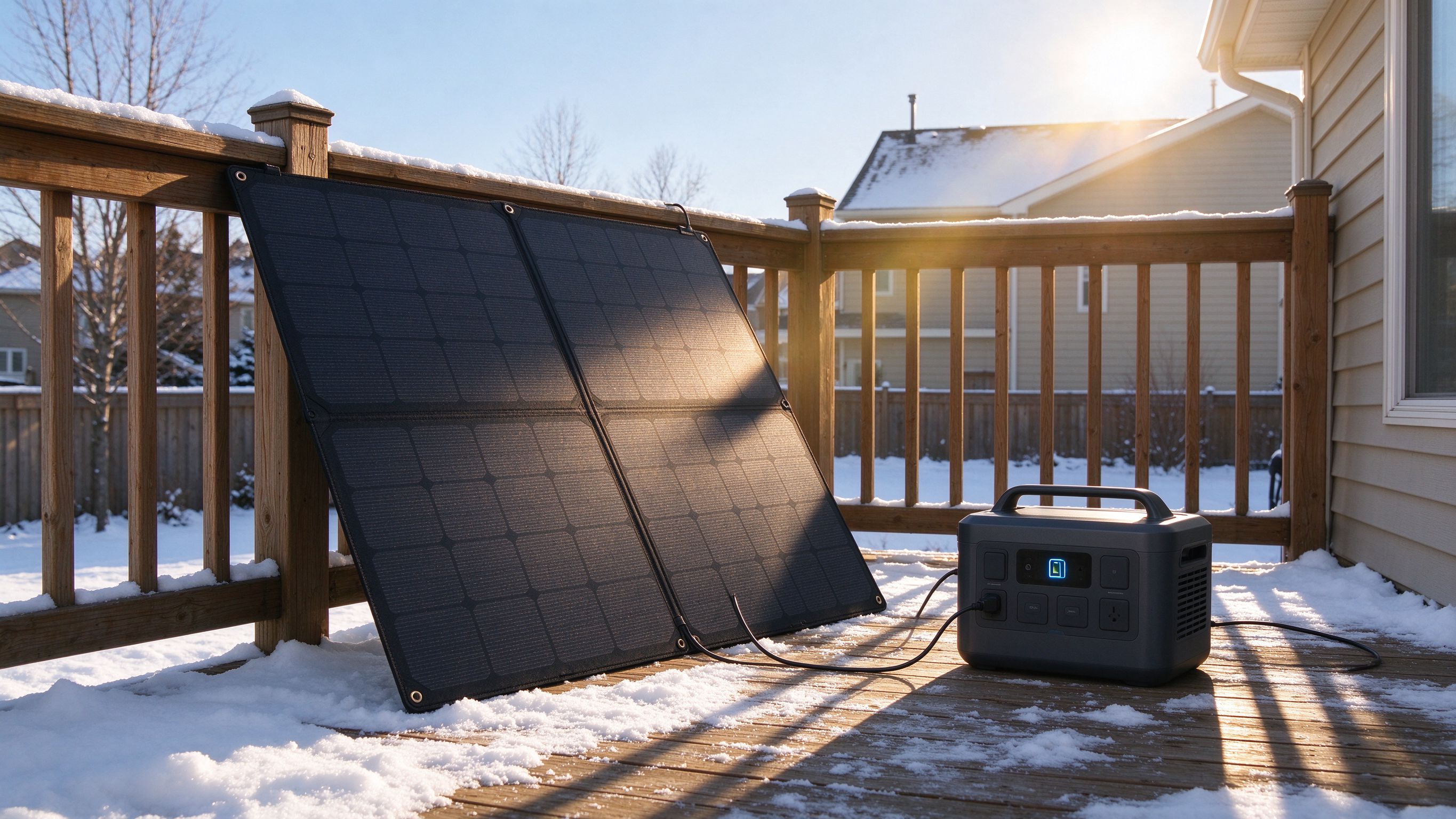
In our continuous-load lab testing, the two stations that closed the gap between brochure and blackout were the EcoFlow Delta 3 (1,024Wh) for single-day events and the EcoFlow DELTA 2 Max (2,048Wh) for the 72-hour solar loop above — both delivering pure sine wave output, sub-40dB acoustics, and zero subscription requirements. Full inrush data, recharge latency, and ownership-cost math are in the complete benchmark report.
Delta 3 vs. DELTA 2 Max: The Complete Benchmarked Review
Continuous-load testing, inrush surge data, recharge latency, and ownership-cost math on both stations — in the full PracticalBench laboratory report.
Read the Full Review →Frequently Asked Questions
The questions we hear most from readers sizing their first emergency station.
How many watt-hours do I actually need for 3 days? +
Priority loads only (refrigerator + CPAP): 4,200–5,250 Wh usable over 72 hours. Full household with furnace fan and lighting: 7,300–9,300 Wh. Add the 25% efficiency buffer on top of either figure.
Can a 2,048Wh station run a refrigerator for 3 days? +
Not on battery alone — roughly 1,740Wh of usable energy covers a full-size fridge for about a day. Add a 400W solar panel (1,000–1,600Wh restored per winter day) and the same station sustains 3–5 continuous days.
Why does cold weather drain batteries faster? +
Below 0°C, LiFePO4 cells lose roughly 10–20% of usable capacity, and inverters burn extra energy maintaining output. This is precisely why the 25% winter buffer is non-negotiable.
Do I need a pure sine wave inverter for an outage? +
Yes. Modified square wave output overheats refrigerator compressors and resets CPAP humidifiers. Certified pure sine wave with <3% THD is required for compressor and medical loads.
Can solar panels keep charging in winter? +
Yes. A 400W portable bifacial panel restores roughly 1,000–1,600Wh per clear winter day — enough to offset the daily draw of priority loads and turn a 2,048Wh station into a multi-day system.